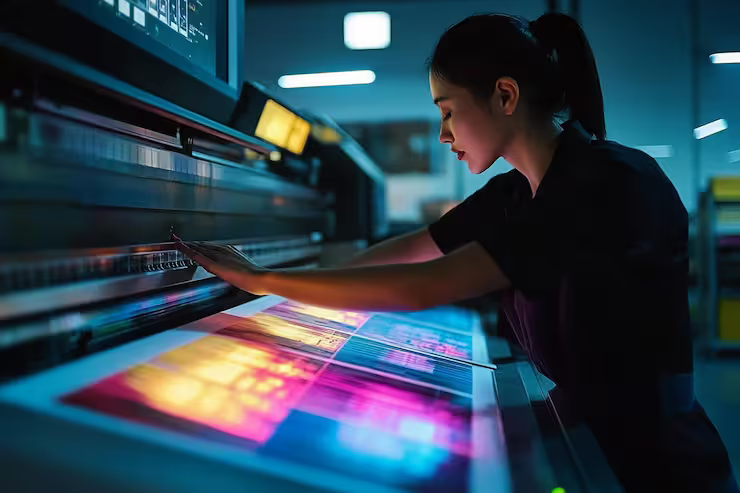
UV printing machines are advanced digital printing systems that use ultraviolet light to instantly cure specially formulated inks during the printing process. Unlike conventional printing methods where inks dry through evaporation or absorption, UV printing relies on photochemical reactions that solidify ink as soon as it is exposed to UV light. This technology enables printing on a wide range of materials, including paper, plastic, glass, metal, wood, acrylic, ceramics, and composite substrates.
The development of UV printing machines emerged from the need for faster drying, higher print durability, and improved color accuracy. Traditional printing often required extended drying time and was limited by substrate compatibility. UV printing machines addressed these limitations by introducing instant curing, minimal ink spread, and high adhesion on non-porous surfaces. Today, UV printing technology is used across packaging, signage, industrial marking, decorative printing, electronics, and specialty applications.UV printing machines are available in flatbed, roll-to-roll, and hybrid configurations, supporting both rigid and flexible materials.
Importance
UV printing machines are important because they enable high-quality, durable printing while supporting efficient production workflows. Instant curing eliminates waiting time between printing and finishing, improving throughput and consistency.
These machines help address several critical challenges:
-
Reducing drying time and production delays
-
Printing on non-absorbent and specialty substrates
-
Achieving sharp images with high color accuracy
-
Improving resistance to scratches, moisture, and chemicals
-
Supporting short runs and variable data printing
Print operators, industrial manufacturers, packaging designers, and signage producers rely on UV printing machines to meet modern demands for customization, durability, and efficiency. As industries require faster turnaround and material flexibility, UV printing continues to gain importance.
Recent Updates
Between 2024 and 2025, UV printing technology advanced with a focus on energy efficiency, print precision, and environmental performance.
Key updates include:
-
January 2024: Improved LED-UV curing systems reduced power consumption while maintaining curing strength.
-
May 2024: Enhanced ink formulations improved adhesion on challenging substrates such as glass and metal.
-
September 2024: High-resolution printheads with smaller droplet sizes improved image sharpness and gradient control.
-
February 2025: AI-assisted color calibration systems began adjusting ink output automatically for consistent results.
-
2025 Trend: Growth in compact UV printers suitable for customization, signage, and on-demand production environments.
These updates reflect a shift toward precision, sustainability, and intelligent print control.
Laws or Policies
UV printing machines are influenced by regulations related to workplace safety, environmental protection, and material compliance.
Key regulatory considerations include:
-
Occupational Safety Standards: UV light exposure limits and protective shielding requirements for operators.
-
Ink and Material Compliance: UV inks must meet safety guidelines for specific applications such as packaging and labeling.
-
Electrical and Mechanical Safety Regulations: Machines must include safe wiring, emergency stops, and controlled access panels.
-
Environmental Guidelines: Many regions encourage low-emission inks and energy-efficient curing systems.
-
Waste Handling Policies: Proper disposal of ink containers and cleaning materials must follow environmental norms.
These regulations ensure safe operation, responsible ink usage, and sustainable printing practices.
Tools and Resources
Several tools and resources support effective UV printing operations:
-
Color Management Software – Ensures consistent color reproduction across materials.
-
UV Intensity Meters – Measure curing strength and lamp efficiency.
-
Substrate Compatibility Charts – Match inks with suitable printing surfaces.
-
Printhead Maintenance Tools – Support nozzle cleaning and performance stability.
-
Production Monitoring Systems – Track print speed, ink usage, and output consistency.
These tools help maintain quality control, efficiency, and reliable printing results.
Table: Types of UV Printing Machines and Applications
| Machine Type | Printing Format | Typical Application |
|---|---|---|
| Flatbed UV Printer | Rigid materials | Signage, glass, wood panels |
| Roll-to-Roll UV Printer | Flexible materials | Banners, films, wallpapers |
| Hybrid UV Printer | Rigid and flexible | Mixed-material printing |
| Industrial UV Printer | High-volume production | Packaging and manufacturing |
| Desktop UV Printer | Small-format printing | Promotional items and customization |
FAQs
1. What is the main function of a UV printing machine?
Its function is to print and instantly cure ink using ultraviolet light for durable and precise results.
2. What materials can be printed using UV technology?
Paper, plastic, glass, metal, wood, acrylic, ceramics, and composite materials.
3. How does UV curing improve print quality?
Instant curing prevents ink spread, resulting in sharper images and stronger adhesion.
4. Are UV printing machines suitable for industrial use?
Yes, many systems are designed for continuous and high-volume industrial printing.
5. What factors affect UV print durability?
Ink formulation, curing intensity, substrate type, and surface preparation.
Conclusion
UV printing machines represent a significant advancement in digital printing technology, offering instant curing, material flexibility, and high durability. Their ability to produce sharp, long-lasting prints on a wide range of substrates supports diverse applications across industrial, commercial, and decorative printing sectors. Continuous improvements in LED-UV curing, ink chemistry, and automation have enhanced efficiency and reduced environmental impact.
Regulatory frameworks guide safe UV exposure, material compliance, and waste management, while supporting tools such as color management systems and intensity meters help maintain consistent performance. As customization, speed, and durability become increasingly important, UV printing machines will remain a key technology in modern printing environments.