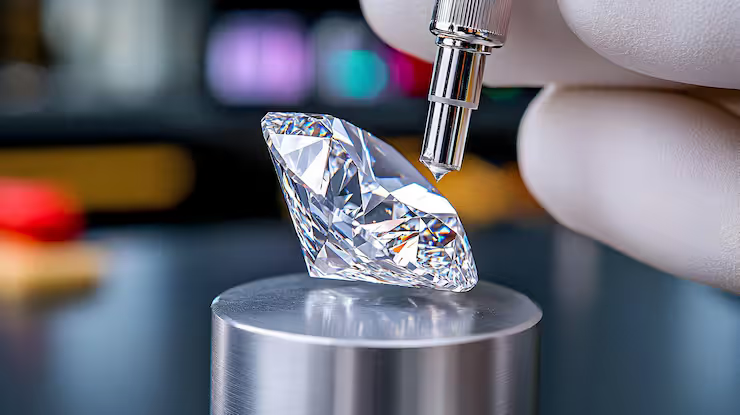
Diamonds are crystalline forms of carbon known for their hardness, brilliance, and long-lasting structure. For centuries, diamonds found in the earth formed naturally under intense heat and pressure over billions of years. These are commonly called natural diamonds.
Advances in material science have made it possible to create diamonds in controlled laboratory environments. These are known as lab-grown diamonds. They have the same chemical composition, crystal structure, and physical properties as natural diamonds, but their formation happens over weeks instead of geological time.
The topic exists because both types now coexist in global markets, research applications, and certification systems. Understanding the difference helps people make informed decisions based on facts rather than assumptions.
Importance
The comparison between lab-grown and natural diamonds matters more today than ever before. Several groups are directly affected, including consumers, researchers, jewellers, regulators, and environmental analysts.
Key reasons this topic is important include:
-
Transparency and disclosure: Clear identification avoids confusion between diamond types.
-
Technological progress: Laboratory processes demonstrate how advanced material engineering has become.
-
Environmental discussions: Diamond origin is often linked to environmental impact debates.
-
Standardization: Certification bodies must adapt grading methods to cover both categories.
This topic also helps address common misunderstandings, such as the belief that lab-grown diamonds are imitations. Scientifically, they are real diamonds, just created through different processes.
Understanding How Each Type Is Formed
Natural diamonds form deep within the Earth’s mantle and reach the surface through volcanic activity. Their formation takes place over billions of years.
Lab-grown diamonds are produced using two main techniques:
-
High Pressure High Temperature (HPHT) – mimics natural geological conditions
-
Chemical Vapor Deposition (CVD) – grows diamond layers atom by atom in a chamber
Despite different origins, both result in diamonds with the same atomic structure.
Comparison Overview
| Feature | Natural Diamonds | Lab-Grown Diamonds |
|---|---|---|
| Origin | Earth’s mantle | Controlled laboratory |
| Formation time | Billions of years | Weeks |
| Chemical structure | Pure carbon | Pure carbon |
| Physical hardness | Identical | Identical |
| Visual appearance | Identical | Identical |
| Trace elements | Naturally occurring | Process-dependent |
Recent Updates and Trends
In 2024, international gemological institutes reported increased adoption of advanced screening tools to distinguish diamond origin more efficiently. Automated spectroscopic equipment is now widely used in grading laboratories.
By March 2025, several industry reports highlighted a steady rise in the share of lab-grown diamonds used in technology-related applications, such as semiconductors and precision cutting tools.
Another notable trend from late 2024 includes improved energy efficiency in CVD production methods. These updates aim to reduce emissions and material waste during diamond creation.
Grading reports have also evolved. Certificates now clearly state “laboratory-grown” or “natural” using standardized terminology, reducing ambiguity for documentation and compliance.
Laws and Policies in India
In India, diamonds fall under regulated trade and certification frameworks to ensure transparency and consumer protection.
Key regulatory aspects include:
-
Bureau of Indian Standards (BIS): Oversees hallmarking and quality disclosure guidelines.
-
Customs and trade rules: Require clear declaration of diamond origin for import and export documentation.
-
Disclosure norms: Industry bodies mandate explicit labeling of laboratory-grown diamonds to avoid misrepresentation.
As of 2024, Indian authorities reinforced alignment with international disclosure standards. This ensures that lab-grown diamonds are identified accurately in certification and records, supporting ethical and legal compliance.
Tools and Resources
Several educational and analytical resources help explain and identify diamond characteristics:
-
Diamond grading reports: Provide information on cut, clarity, color, and carat measurement
-
Spectroscopy tools: Identify growth patterns unique to lab-grown diamonds
-
Online diamond comparison charts: Explain structural similarities and differences
-
Gemological education portals: Offer beginner-friendly explanations of diamond science
These resources focus on factual learning rather than promotion and are commonly used by students and professionals.
Common Misconceptions Clarified
Many people assume visual differences exist between the two types. In reality, even experts rely on specialized equipment for accurate identification.
Another misconception is durability. Both types rank the same on the Mohs hardness scale, meaning performance and longevity are equivalent under normal conditions.
Frequently Asked Questions
Are lab-grown diamonds real diamonds?
Yes. They are composed of pure carbon with the same crystal structure as natural diamonds.
Can the naked eye tell the difference?
No. Specialized laboratory instruments are required to identify origin.
Do both types receive certification?
Yes. Reputable gemological laboratories issue grading reports for both, clearly stating origin.
Are lab-grown diamonds used outside jewellery?
Yes. They are increasingly used in electronics, optics, and industrial cutting applications.
Does origin affect physical quality?
No. Hardness, brilliance, and durability remain the same.
Environmental and Ethical Considerations
Discussions around sustainability often include diamond sourcing. Lab-grown diamonds allow controlled production conditions, while natural diamonds depend on mining practices. Regulations and monitoring aim to address ethical concerns across both categories.
Conclusion
Lab-grown and natural diamonds are scientifically identical materials created through different processes. The growing presence of lab-grown diamonds reflects advancements in technology rather than a replacement of natural diamonds.
Understanding the distinctions helps promote clarity, accurate disclosure, and informed discussion. With updated regulations, improved grading tools, and evolving industry standards, the conversation around diamond origin continues to become more transparent and education-focused.