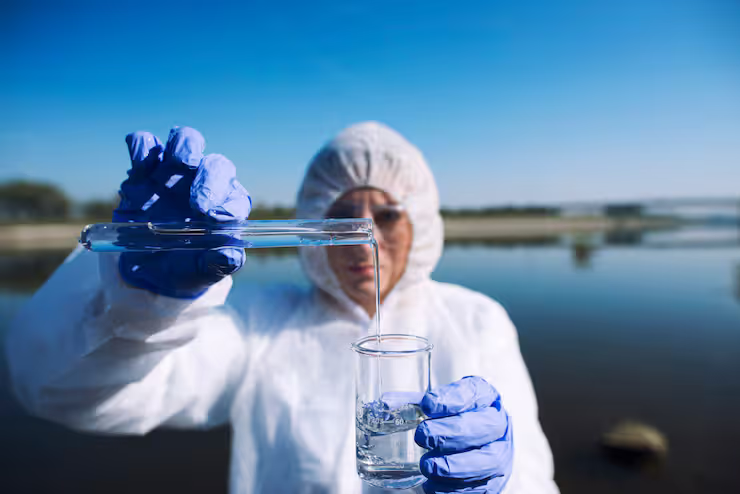
Water filtration systems are technologies designed to remove unwanted substances from water to make it safer and more suitable for everyday use. These systems target impurities such as sediments, chemicals, microorganisms, dissolved solids, and other contaminants that may affect water quality.
Natural water sources like rivers, lakes, and groundwater often contain impurities due to environmental exposure, industrial activity, agricultural runoff, and aging infrastructure. Even treated municipal water can carry residual particles or byproducts formed during treatment processes. Water filtration technologies exist to address these challenges by improving water clarity, taste, odor, and overall quality.
Over time, filtration systems have evolved from simple physical barriers, such as sand and cloth filters, to advanced multi-stage technologies that combine physical, chemical, and biological treatment methods. Today, water filtration plays a critical role in household water management, industrial processes, healthcare facilities, and environmental protection efforts.
Importance: Why Water Filtration Matters Today
Water filtration systems matter because water quality directly impacts public health, environmental sustainability, and economic stability. As populations grow and urbanization increases, pressure on water resources continues to rise.
Key reasons this topic is important include:
-
Increasing detection of contaminants such as heavy metals, microplastics, and chemical residues
-
Aging water distribution systems that may introduce pollutants
-
Climate change affecting water availability and source reliability
-
Growing awareness of water quality standards and safety guidelines
Water filtration affects a wide range of groups:
-
Households seeking improved drinking water quality
-
Industries requiring consistent water purity for operations
-
Healthcare institutions relying on controlled water standards
-
Municipal authorities managing large-scale water distribution
By addressing contamination, filtration technologies help reduce health risks, support regulatory compliance, and improve long-term water management. They also contribute to water conservation by enabling reuse and efficient treatment of available resources.
Recent Updates: Developments and Trends in Water Filtration Technologies
Over the past year, water filtration technologies have seen notable advancements and shifts driven by research, regulation, and environmental priorities.
In March 2025, several environmental agencies highlighted increased monitoring of per- and polyfluoroalkyl substances (PFAS) in water systems, leading to wider adoption of advanced filtration media such as activated carbon and high-pressure membrane systems.
In July 2025, new studies emphasized the presence of microplastics in treated drinking water, accelerating research into nano-filtration and hybrid membrane solutions designed to capture extremely small particles.
By October 2025, digital water monitoring tools became more common, integrating sensors and data analytics with filtration systems to provide real-time water quality insights. These systems help identify changes in contaminant levels and filtration performance.
Another emerging trend during late 2025 was the increased focus on energy-efficient filtration technologies, particularly in industrial and municipal settings, aiming to reduce energy consumption while maintaining treatment effectiveness.
Laws and Policies: Regulatory Framework Affecting Water Filtration
Water filtration systems are influenced by laws, standards, and public policies that define acceptable water quality levels and treatment requirements. These frameworks vary by country but generally focus on protecting public health and the environment.
Common regulatory elements include:
-
Maximum contaminant levels for chemicals, metals, and microorganisms
-
Guidelines for water treatment and monitoring practices
-
Environmental discharge standards for treated wastewater
-
Certification and testing requirements for filtration technologies
In many regions, government programs support water quality improvement initiatives through infrastructure upgrades and public awareness campaigns. Policies increasingly emphasize transparency, regular testing, and reporting of water quality data.
Recent policy discussions have also focused on emerging contaminants and climate resilience, encouraging the adoption of adaptable and advanced filtration technologies capable of meeting future water quality challenges.
Tools and Resources: Helpful References for Understanding Water Filtration
A range of tools and resources can help individuals and organizations better understand water filtration systems and water quality data.
Helpful resources include:
-
Water quality testing databases published by environmental agencies
-
Online water quality calculators for estimating contaminant levels
-
Educational websites explaining filtration technologies and standards
-
Research publications from environmental and engineering institutions
-
Digital dashboards for monitoring water parameters such as turbidity and pH
These resources support informed decision-making and help users interpret water quality information in a clear and reliable way.
Overview of Common Water Filtration Technologies
Water filtration systems use different technologies depending on the type of contaminants being addressed.
| Filtration Technology | Primary Function | Common Applications |
|---|---|---|
| Activated Carbon | Adsorbs chemicals and odors | Drinking water treatment |
| Reverse Osmosis | Removes dissolved solids | Desalination and purification |
| Ultrafiltration | Filters microorganisms | Medical and industrial use |
| Sand Filtration | Removes sediments | Municipal treatment |
| UV Treatment | Inactivates microorganisms | Supplemental disinfection |
Each technology has specific strengths and is often combined with others in multi-stage filtration systems to improve overall effectiveness.
Comparison of Filtration Efficiency by Contaminant Type
| Contaminant Type | Effective Technologies |
|---|---|
| Sediments | Sand filtration, cartridge filters |
| Chemical compounds | Activated carbon |
| Dissolved salts | Reverse osmosis |
| Bacteria and viruses | Ultrafiltration, UV treatment |
| Microplastics | Nano-filtration, membrane systems |
This comparison highlights why modern filtration systems often integrate multiple treatment stages.
FAQs: Common Questions About Water Filtration Systems
What is the main purpose of a water filtration system?
The main purpose is to remove unwanted substances from water to improve quality, safety, and usability for various applications.
Are all water filtration systems the same?
No. Systems vary based on technology, filtration stages, and the types of contaminants they are designed to address.
How do filtration systems differ from water treatment plants?
Water treatment plants handle large-scale processing and distribution, while filtration systems can be used at household, industrial, or supplemental levels.
Can filtration remove all contaminants from water?
No single system removes every contaminant. Multi-stage filtration improves coverage across different impurity types.
Why is monitoring water quality important after filtration?
Monitoring ensures filtration systems continue to perform effectively and helps detect changes in water composition over time.
Conclusion: The Role of Water Filtration in Modern Water Management
Water filtration systems and technologies play a vital role in addressing today’s water quality challenges. From removing visible particles to targeting microscopic contaminants, these systems support safer water use across households, industries, and public infrastructure.
As environmental pressures increase and regulations evolve, filtration technologies continue to adapt through innovation and data-driven approaches. Understanding how these systems work, the policies that guide them, and the tools available for monitoring water quality empowers individuals and organizations to engage responsibly with water resources.
By focusing on clarity, reliability, and adaptability, water filtration remains a foundational component of sustainable water management in the modern world.