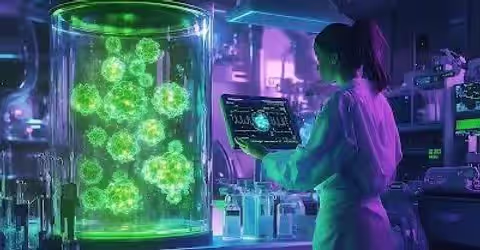
In biotechnology, a bioreactor plays an essential role in the controlled cultivation of cells, microorganisms, or enzymes. From pharmaceuticals to biofuels, or waste treatment, these systems function as the bedrock of modern bioprocessing. This article covers broad aspects, types, critical components, operating parameters, and key industry applications of bioreactors. It is a tailored insights guide for nascent and developed biotechnological sectors as well.
What Is a Bioreactor?
A bioreactor is a specially designed vessel that provides a controlled environment for carrying out biological reactions. These reactions involve living organisms such as microbial cultures, animal or plant cells, or enzymes. By carefully regulating conditions like temperature, pH, oxygen levels, and nutrient supply, bioreactors enable efficient and reproducible biological processes.
Bioreactors are used across a wide range of scales—from small laboratory systems used for research and testing to large industrial units capable of producing commercial quantities of biologically derived products. Their applications span industries such as pharmaceuticals, agriculture, biofuels, food processing, and environmental management.
Types of Bioreactors
Different bioreactor types are designed to meet specific production goals and biological requirements.
Batch Bioreactors
Batch bioreactors operate in fixed production cycles. All nutrients are added at the beginning, and the process runs until completion before harvesting. These systems are widely used for antibiotic and enzyme production, where high purity and consistent quality are essential.
Fed-Batch Bioreactors
In fed-batch systems, nutrients are gradually added during operation. This approach prevents substrate inhibition and extends the active growth phase of cells. Fed-batch bioreactors are commonly used for protein and enzyme production, allowing higher yields compared to batch processes.
Continuous Bioreactors
Continuous bioreactors continuously receive fresh medium while an equal amount of culture is removed. This maintains a steady biological state and supports high-volume production, such as in biofuel manufacturing and some pharmaceutical processes.
Photobioreactors
Photobioreactors use light as an energy source and are designed for cultivating photosynthetic organisms, particularly algae. These systems are used in the production of biofuels, nutritional supplements, cosmetics, and specialty chemicals.
Main Components of a Bioreactor
A bioreactor’s performance depends heavily on its internal components:
-
Agitator or Mixer: Ensures uniform distribution of cells, nutrients, and gases throughout the vessel.
-
Aeration System: Supplies oxygen for aerobic processes using spargers, diffusers, or bubble columns.
-
Temperature Control System: Maintains optimal growth temperatures through heating or cooling mechanisms.
-
pH and Dissolved Oxygen (DO) Sensors: Continuously monitor and regulate environmental conditions.
-
Sampling Ports: Allow safe culture sampling for analysis and contamination checks.
Key Bioreactor Design Considerations
Bioreactor design varies based on product type, scale, and operational mode.
-
Scale: Laboratory bioreactors typically range from 1 to 20 liters, while industrial systems can exceed 10,000 liters.
-
Material Selection: Stainless steel is preferred for industrial use due to durability and sterility, while glass is common in laboratory setups.
-
Mixing and Aeration: The viscosity and density of the culture medium influence impeller design and oxygen transfer efficiency.
-
Process Control: Advanced automation systems help maintain stable conditions, reduce human intervention, and improve product consistency.
Applications of Bioreactors
Bioreactors play a vital role across multiple industries:
Pharmaceutical Industry
They are essential for producing vaccines, antibiotics, monoclonal antibodies, and therapeutic proteins, including mammalian cell cultures.
Agriculture
Bioreactors are used to manufacture biofertilizers and biopesticides, supporting sustainable and eco-friendly farming practices.
Biofuel Production
Microbial and algae-based bioreactors help produce bioethanol, biodiesel, and hydrogen, contributing to renewable energy development.
Environmental Treatment
Bioreactors assist in wastewater treatment and bioremediation by breaking down pollutants and industrial effluents.
Bioreactor Operation and Monitoring
Effective operation requires continuous monitoring of critical parameters:
-
Temperature Control: Even minor fluctuations can negatively affect cell growth and productivity.
-
Oxygen Supply: Adequate oxygen transfer is crucial for aerobic cultures and is managed through aeration systems.
-
Nutrient Levels: Monitoring prevents nutrient depletion that could halt biological activity.
-
pH Regulation: Stable pH ensures optimal enzyme activity and cell viability.
Challenges in Scaling Up Bioreactors
Scaling a bioreactor from laboratory to industrial size presents several challenges:
-
Uniform Mixing: Larger volumes require advanced mixing systems to ensure even distribution.
-
Oxygen Transfer Efficiency: High cell densities increase oxygen demand, requiring optimized aeration design.
-
Sterility and Contamination Control: Industrial-scale systems rely heavily on CIP (Clean-in-Place) and SIP (Sterilize-in-Place) processes to maintain sterility.
Routine Maintenance and Quality Assurance
Proper maintenance ensures long-term reliability and performance:
-
Regular Sterilization: Prevents cross-contamination between production cycles.
-
Component Inspection: Early detection of wear in agitators, aerators, and seals reduces downtime.
-
Sensor Calibration: Accurate readings from pH, temperature, and DO sensors are essential for process control.
-
Timely Replacement: Worn components must be replaced to maintain system integrity.
Bioreactors and Sustainable Innovation
Countries such as Austria have emerged as leaders in bioprocessing innovation, emphasizing environmentally friendly technologies. The growing adoption of automation, robotics, and advanced monitoring systems has significantly improved bioreactor efficiency and scalability. These developments support sustainable practices across pharmaceuticals, agriculture, chemical manufacturing, and environmental protection.
Conclusion
Bioreactors are a cornerstone of modern biotechnology, enabling large-scale, efficient, and sustainable production of biologically derived products. From life-saving medicines to renewable energy solutions, bioreactors continue to evolve through advancements in automation and process control. With optimized design, precise monitoring, and effective scaling strategies, bioreactors remain central to the future of global bioprocessing.
Disclaimer: The information provided in this article is for informational purposes only. We do not make any claims or guarantees regarding the accuracy, reliability, or completeness of the information presented. The content is not intended as professional advice and should not be relied upon as such. Readers are encouraged to conduct their own research and consult with appropriate professionals before making any decisions based on the information provided in this article.