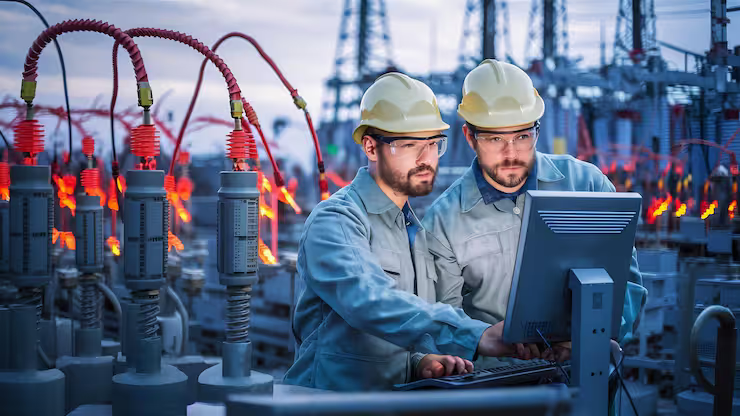
Industrial power generators are large-scale electrical systems designed to produce electricity independently of the main power grid. They are commonly used in environments where uninterrupted power is critical or where grid access is limited or unstable. Unlike small household units, these systems are engineered to handle high electrical loads and continuous operation.
At a basic level, an industrial generator converts mechanical energy into electrical energy. This is typically done by using an internal combustion engine or turbine to rotate an alternator. The alternator then produces electricity through electromagnetic induction. These systems exist to support industrial operations, infrastructure facilities, and essential services that cannot rely solely on public power networks.
Common types of industrial generators include:
-
Diesel-powered generators for heavy-duty applications
-
Gas-powered generators using natural gas or biogas
-
Hybrid generator systems combined with energy storage
-
Turbine-based generators for large industrial plants
These systems are integrated with control panels, cooling systems, and protection mechanisms to ensure stable and safe operation under demanding conditions.
Why industrial power generators matter today
Reliable electricity is essential for modern economies. Industrial power generators play a key role in maintaining operational continuity during power disruptions and in locations where grid expansion is challenging.
Industries and sectors affected include:
-
Manufacturing and processing facilities
-
Data centers and telecom infrastructure
-
Healthcare and public utilities
-
Construction and infrastructure development
-
Mining, oil, and gas operations
Power instability can result in equipment damage, data loss, and safety risks. Industrial generators help address these problems by ensuring electrical load management and voltage stability. In regions experiencing rapid urbanization and industrial growth, these systems support productivity and infrastructure resilience.
Another important factor is energy efficiency compliance. Modern industrial generators are designed to optimize fuel utilization and reduce emissions while maintaining consistent output. This makes them relevant not only for operational reliability but also for environmental responsibility.
Recent updates and technology trends
Over the past year, industrial power generation has seen noticeable advancements focused on efficiency, monitoring, and environmental impact.
In March 2025, several manufacturers introduced advanced digital control systems that support real-time performance monitoring and predictive maintenance. These systems use sensors and data analytics to identify potential issues before failures occur.
In July 2025, hybrid generator configurations gained wider adoption. These setups combine conventional generators with battery energy storage systems, allowing smoother load transitions and reduced fuel consumption during low-demand periods.
Another trend observed in late 2025 is the integration of generators with industrial energy management platforms. These platforms help facilities coordinate generators with grid power and renewable sources, improving overall electrical efficiency and system reliability.
The focus across these updates is on smarter operation, reduced emissions, and better alignment with evolving environmental standards.
Laws, regulations, and policy considerations
Industrial power generators are influenced by technical standards and environmental regulations that vary by country. These rules generally address emissions, noise levels, fuel handling, and electrical safety.
In India, industrial generators are governed by emission norms aligned with Central Pollution Control Board guidelines. These regulations require modern engines to meet stricter limits on particulate matter and nitrogen oxides. Electrical installations must also comply with national electrical codes and workplace safety standards.
In many regions, generators used for critical infrastructure are subject to periodic inspection and testing requirements. Environmental policies increasingly encourage cleaner fuel options and the adoption of hybrid or low-emission systems.
Understanding local compliance requirements is essential for ensuring lawful operation and long-term system viability.
Tools and resources related to industrial generators
Several tools and resources help professionals and organizations understand and manage industrial power generators more effectively.
Helpful resources include:
-
Electrical load calculation software for capacity planning
-
Generator sizing calculators based on equipment demand
-
Energy efficiency assessment tools for industrial facilities
-
Manufacturer technical documentation and operation manuals
-
Government portals publishing emission and safety guidelines
Example: Generator capacity planning overview
| Parameter | Description |
|---|---|
| Connected Load | Total electrical demand of equipment |
| Peak Load Factor | Highest short-term power requirement |
| Power Factor | Efficiency of electrical usage |
| Runtime Requirement | Expected operating duration |
These tools support informed decision-making and safer system design without focusing on commercial transactions.
Common questions about industrial power generators
How does an industrial generator start automatically?
Most systems use an automatic transfer switch. This device detects a power interruption and signals the generator to start, then transfers the electrical load once stable output is achieved.
What determines the size of an industrial generator?
Generator size depends on total connected load, starting current of equipment, power factor, and required operating duration. Proper load analysis helps avoid underperformance or inefficiency.
Are industrial generators suitable for continuous operation?
Some models are designed for continuous or prime power use, while others are intended for standby operation. The intended duty cycle must align with the generator’s design specifications.
How do generators maintain voltage stability?
Voltage regulators and control systems adjust output automatically to match load variations, ensuring stable electricity supply and protecting connected equipment.
What role do generators play in energy resilience?
They provide backup and supplementary power, helping facilities maintain operations during grid instability and supporting overall infrastructure reliability.
Conclusion
Industrial power generators are a foundational component of modern electrical infrastructure. They exist to ensure reliable power delivery in environments where continuity and stability are essential. Through mechanical-to-electrical energy conversion, these systems support a wide range of industrial and public applications.
Recent developments show a clear shift toward smarter controls, improved efficiency, and better environmental alignment. At the same time, regulatory frameworks continue to shape how these systems are designed and operated.
By understanding how industrial generators work, why they matter, and how they are regulated, readers can gain a clearer view of their role in today’s energy landscape.