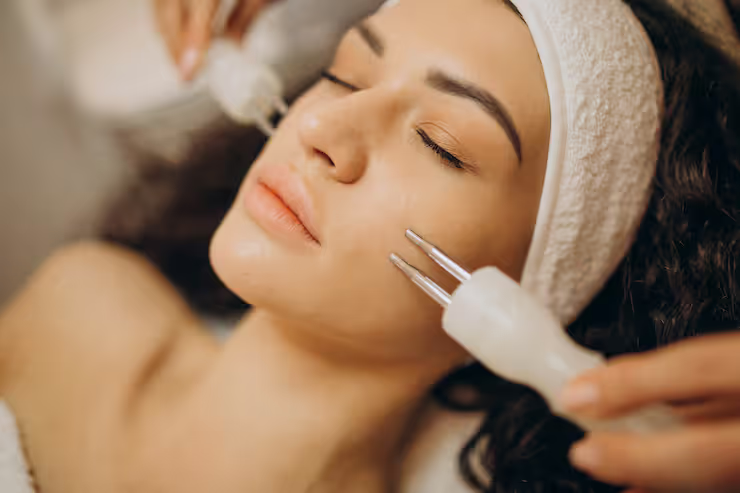
Skin rejuvenation refers to a group of medical and dermatological approaches designed to support the skin’s natural renewal process. Over time, the skin changes due to aging, environmental exposure, lifestyle factors, and biological processes. These changes may include uneven texture, reduced elasticity, pigmentation variation, or fine surface lines.
The concept of skin rejuvenation exists to address these visible and structural changes using scientifically studied techniques. Modern treatments are based on dermatology research, skin biology, and controlled clinical technologies that aim to encourage cellular turnover, collagen activity, and improved skin function.
Unlike basic skincare routines, skin rejuvenation methods are typically performed under professional supervision and rely on standardized medical devices or dermatological procedures. The field has evolved significantly due to advances in biomedical engineering, laser science, and non-invasive treatment technologies.
Importance: Why Skin Rejuvenation Matters Today
Skin rejuvenation has become increasingly relevant due to demographic, environmental, and healthcare-related factors. Longer life expectancy and greater awareness of skin health have contributed to wider public interest in maintaining skin function over time.
Key reasons this topic matters today include:
-
Increased exposure to ultraviolet radiation and environmental pollutants
-
Higher prevalence of skin sensitivity and pigmentation concerns
-
Growing focus on preventive dermatology and skin health education
-
Advancements in non-invasive aesthetic procedures with lower recovery impact
Skin rejuvenation affects adults across a wide age range, not only for appearance-related reasons but also for maintaining skin barrier function and overall skin integrity. In some cases, these methods are used to support recovery after dermatological conditions or procedures.
From a healthcare perspective, skin rejuvenation research contributes to broader understanding of wound healing, tissue regeneration, and aging biology.
How Modern Skin Rejuvenation Treatments Work
Modern skin rejuvenation methods function by interacting with specific layers of the skin in controlled ways. The goal is not surface masking, but biological stimulation.
Common mechanisms include:
-
Thermal stimulation to activate collagen response
-
Controlled micro-injury to trigger natural repair cycles
-
Light-based energy absorption by targeted skin components
-
Chemical interaction with the outer skin layer to support renewal
Below is a simplified overview of how different approaches interact with the skin:
| Treatment Category | Primary Skin Layer Targeted | Core Biological Effect |
|---|---|---|
| Laser-based methods | Dermis | Collagen stimulation |
| Light-based systems | Epidermis & dermis | Pigment regulation |
| Chemical exfoliation | Epidermis | Cellular turnover |
| Microneedling | Dermis | Tissue repair response |
These methods are developed through clinical research and are refined to balance effectiveness with skin safety.
Recent Updates: Trends and Developments in the Past Year
Over the past year, the skin rejuvenation field has seen notable developments driven by technology refinement and regulatory clarity.
In 2024, several dermatology conferences highlighted advancements in fractional laser calibration, allowing more precise energy delivery with reduced skin stress. Research published in mid-2024 emphasized improved protocols for combination treatments, where multiple techniques are applied sequentially for comprehensive skin renewal.
By early 2025, there has been increased attention on data-driven skin analysis tools. These systems use imaging and AI-assisted evaluation to help practitioners assess skin condition more accurately before selecting treatment approaches.
Another trend observed in late 2024 is the growing preference for non-ablative technologies. These approaches focus on minimal disruption to the skin surface while still engaging deeper biological responses.
Additionally, updated clinical guidelines released during 2025 stress the importance of personalized skin assessment rather than standardized treatment selection.
Laws and Policies: Regulatory Framework and Oversight
Skin rejuvenation treatments are influenced by healthcare regulations that vary by country but generally focus on safety, device approval, and practitioner qualification.
Key regulatory considerations include:
-
Medical device classification and approval standards
-
Guidelines on energy-based dermatology equipment usage
-
Practitioner licensing and scope of practice rules
-
Patient information and consent requirements
In many regions, laser and energy-based systems must meet national medical device regulations before clinical use. Regulatory authorities periodically update safety standards to reflect new research findings.
Government health agencies also issue guidance on advertising and public communication related to dermatology procedures, ensuring that educational content remains factual and non-misleading.
These policies aim to protect public health while allowing responsible innovation in dermatology technology.
Tools and Resources: Helpful References and Technologies
Several tools and resources support understanding and application of skin rejuvenation concepts.
Commonly used tools include:
-
Digital skin imaging systems for texture and pigment analysis
-
Clinical treatment planning software
-
Dermatology research databases and journals
-
Educational platforms focused on cosmetic dermatology science
Helpful online resources may include:
-
Peer-reviewed dermatology publications
-
National dermatological association guidelines
-
Medical device regulatory authority portals
-
Continuing education platforms for skin science
These resources help ensure that skin rejuvenation practices remain evidence-based and aligned with current scientific standards.
Frequently Asked Questions About Skin Rejuvenation
Is skin rejuvenation only related to aging?
No. While aging is a common factor, skin rejuvenation also addresses changes caused by environmental exposure, skin conditions, and lifestyle-related factors.
Are modern skin rejuvenation methods invasive?
Many modern approaches are non-invasive or minimally invasive, focusing on controlled stimulation rather than surgical alteration.
How long do skin rejuvenation effects typically last?
Results vary depending on the method used, skin condition, and biological response. Maintenance protocols are often part of long-term skin health strategies.
Can all skin types undergo rejuvenation treatments?
Different skin types require tailored approaches. Advances in dermatology have improved treatment adaptability across diverse skin profiles.
Is scientific research ongoing in this field?
Yes. Skin rejuvenation remains an active area of dermatology research, particularly in regenerative medicine and biomedical technology.
Conclusion
Skin rejuvenation represents a scientifically grounded approach to supporting skin health through controlled, research-driven methods. Modern treatments are shaped by advances in dermatology, biomedical engineering, and regulatory oversight.
As awareness of skin biology grows, the focus continues to shift toward personalized, evidence-based approaches that align with individual skin characteristics and long-term skin function. Ongoing research and updated guidelines ensure that skin rejuvenation remains rooted in safety, transparency, and scientific understanding rather than short-term trends.
By viewing skin rejuvenation through an educational and clinical lens, individuals can better understand how modern dermatology addresses skin changes in a structured and responsible way.
Disclaimer: The information provided in this article is for informational purposes only. We do not make any claims or guarantees regarding the accuracy, reliability, or completeness of the information presented. The content is not intended as professional advice and should not be relied upon as such. Readers are encouraged to conduct their own research and consult with appropriate professionals before making any decisions based on the information provided in this article.