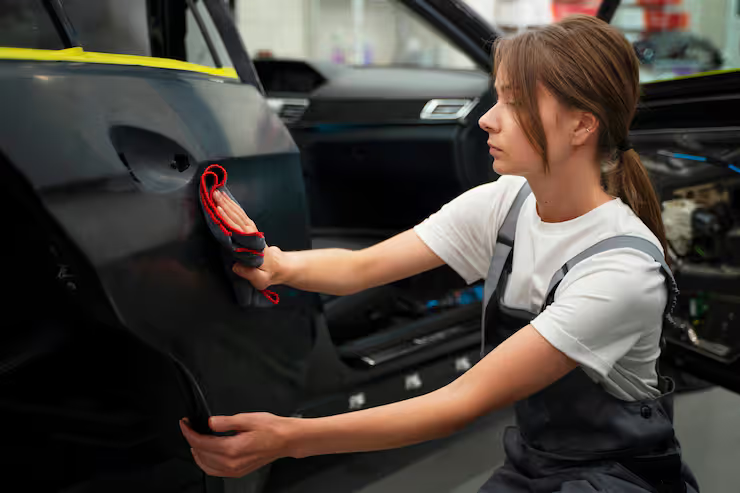
Car paint protection refers to methods and materials used to preserve a vehicle’s exterior paint from environmental and mechanical damage. Modern vehicles rely on multi-layer paint systems that include primer, base coat, and clear coat. While these layers are designed to withstand normal use, they are still vulnerable to wear over time.
Everyday exposure to sunlight, dust, road debris, moisture, and air pollutants gradually affects the paint surface. Paint protection exists to reduce this impact and extend the life and appearance of the original factory finish. It is not about altering the color or style of the car but about maintaining the integrity of the painted surface.
Historically, basic waxing was the most common form of protection. Over time, advances in material science have introduced more durable solutions such as synthetic sealants, polymer coatings, and transparent protective films. These developments reflect the growing emphasis on long-term vehicle maintenance and asset preservation.
Car paint protection is now commonly discussed in automotive care guides, vehicle ownership manuals, and consumer education resources because paint condition plays a role in both aesthetics and surface durability.
Importance – Why Car Paint Protection Matters Today
Car paint protection has become increasingly relevant due to changes in driving environments and vehicle ownership patterns. Urban traffic density, longer commute times, and exposure to industrial pollution have increased paint degradation risks.
This topic matters for:
-
Private vehicle owners
-
Fleet managers
-
Long-term vehicle users
-
People living in high UV or high pollution regions
Paint damage is not only cosmetic. Over time, unprotected paint may lead to:
-
Clear coat oxidation
-
Fading or discoloration
-
Surface micro-scratches
-
Increased susceptibility to corrosion
By slowing these processes, paint protection helps maintain surface consistency and reduces the need for corrective repainting. For vehicle owners who plan to keep a car for many years, maintaining the original paint condition can support long-term usability and appearance.
Below is a simplified overview of common paint-related risks and their sources:
| Paint Issue | Common Cause | Typical Environment |
|---|---|---|
| Fading | UV radiation | High sunlight regions |
| Micro-scratches | Dust, washing | Urban and dry areas |
| Staining | Bird droppings, tree sap | Outdoor parking |
| Oxidation | Air pollution, moisture | Industrial or coastal areas |
Paint protection does not eliminate exposure but reduces the rate at which these issues appear.
Recent Updates – Trends and Developments in the Past Year
Over the past year, car paint protection discussions have increasingly focused on durability testing, environmental safety, and compatibility with modern vehicle finishes.
In March 2025, several automotive research publications highlighted improvements in ceramic-based surface coatings that enhance resistance to UV radiation and chemical contaminants. These formulations emphasize longer performance cycles under varied climate conditions.
By August 2025, industry testing labs began publishing comparative durability data for transparent protective films, focusing on self-healing surface behavior and optical clarity. This helped standardize evaluation methods for paint surface resilience.
Another notable trend in late 2025 was the growing use of water-based protective formulations. These products aim to reduce volatile organic compound (VOC) emissions, aligning paint care technologies with broader environmental standards.
Digital tools have also gained attention. Vehicle maintenance platforms increasingly include paint condition tracking and surface inspection guidance as part of comprehensive car care monitoring systems.
These updates indicate a shift from appearance-focused solutions toward science-backed surface preservation.
Laws or Policies – Regulatory and Compliance Considerations
Car paint protection itself is not directly regulated in most countries, but related rules influence how protection materials are developed and used.
Environmental regulations often govern:
-
Chemical composition of surface coatings
-
VOC emission limits
-
Disposal of automotive maintenance materials
In India, the Central Pollution Control Board (CPCB) guidelines affect the formulation of automotive chemicals, encouraging reduced solvent usage. Similar policies exist in the European Union under REACH regulations and in the United States under EPA standards.
Another relevant area is vehicle modification law. Paint protection methods that do not alter vehicle color or reflectivity typically fall outside modification restrictions. However, reflective or tinted films may require compliance with local motor vehicle regulations.
Automotive manufacturers also provide paint care guidelines in owner manuals. Following these recommendations helps ensure compatibility with factory-applied paint systems and warranty conditions.
Understanding regulatory context helps vehicle owners make informed decisions without unintentionally violating local rules.
Tools and Resources – Helpful References for Learning and Monitoring
Several tools and resources support understanding and maintaining car paint protection. These are educational and informational in nature.
Vehicle Surface Inspection Tools
-
Digital paint thickness gauges
-
Mobile apps for visual damage logging
-
UV exposure tracking tools
Educational Resources
-
Automotive maintenance guides
-
Manufacturer owner manuals
-
Research articles on paint durability
Online Platforms
-
Automotive knowledge portals
-
Vehicle care tracking dashboards
-
Maintenance scheduling software
Reference Charts
-
Paint layer composition diagrams
-
Environmental exposure impact charts
Example overview of paint layer structure:
| Layer | Function |
|---|---|
| Primer | Adhesion and corrosion resistance |
| Base Coat | Color and visual finish |
| Clear Coat | Surface protection and gloss |
These resources help car owners understand how protection interacts with paint structure rather than relying on assumptions.
FAQs – Common Questions About Car Paint Protection
What does car paint protection actually do?
Car paint protection reduces the impact of environmental and physical factors on the paint surface. It slows fading, staining, and surface wear but does not make paint damage impossible.
Is paint protection only for new cars?
No. Paint protection methods can be applied to both new and used vehicles, provided the paint surface is properly prepared and free from major defects.
Does paint protection change the color or shine of a car?
Most protection methods are transparent and designed to preserve the existing appearance rather than alter it. Any visual change is usually minimal and temporary.
How long does paint protection typically last?
Durability depends on the type of protection, driving conditions, and maintenance habits. Some methods last months, while others can remain effective for years.
Is paint protection the same as repainting?
No. Paint protection preserves existing paint, while repainting replaces damaged or worn paint layers entirely.
Conclusion – A Practical Perspective for Car Owners
Car paint protection is best understood as a preventive maintenance concept rather than a cosmetic upgrade. It exists to support the longevity and stability of modern automotive paint systems under real-world conditions.
As driving environments become more demanding and vehicle ownership periods extend, interest in paint preservation continues to grow. Recent developments show a shift toward environmentally conscious materials, standardized testing, and data-driven surface care practices.
By understanding the purpose, importance, regulatory context, and available resources, car owners can approach paint protection as an informed aspect of responsible vehicle maintenance. Knowledge, rather than assumptions, remains the most effective tool in preserving a car’s exterior over time.